WordPress doesn't have to look like WordPress.
WordPress powers almost half the internet, yet many websites built on it end up looking surprisingly similar. The problem isn't WordPress itself. It's how it's often used—and why a hybrid approach can sometimes be the better choice.
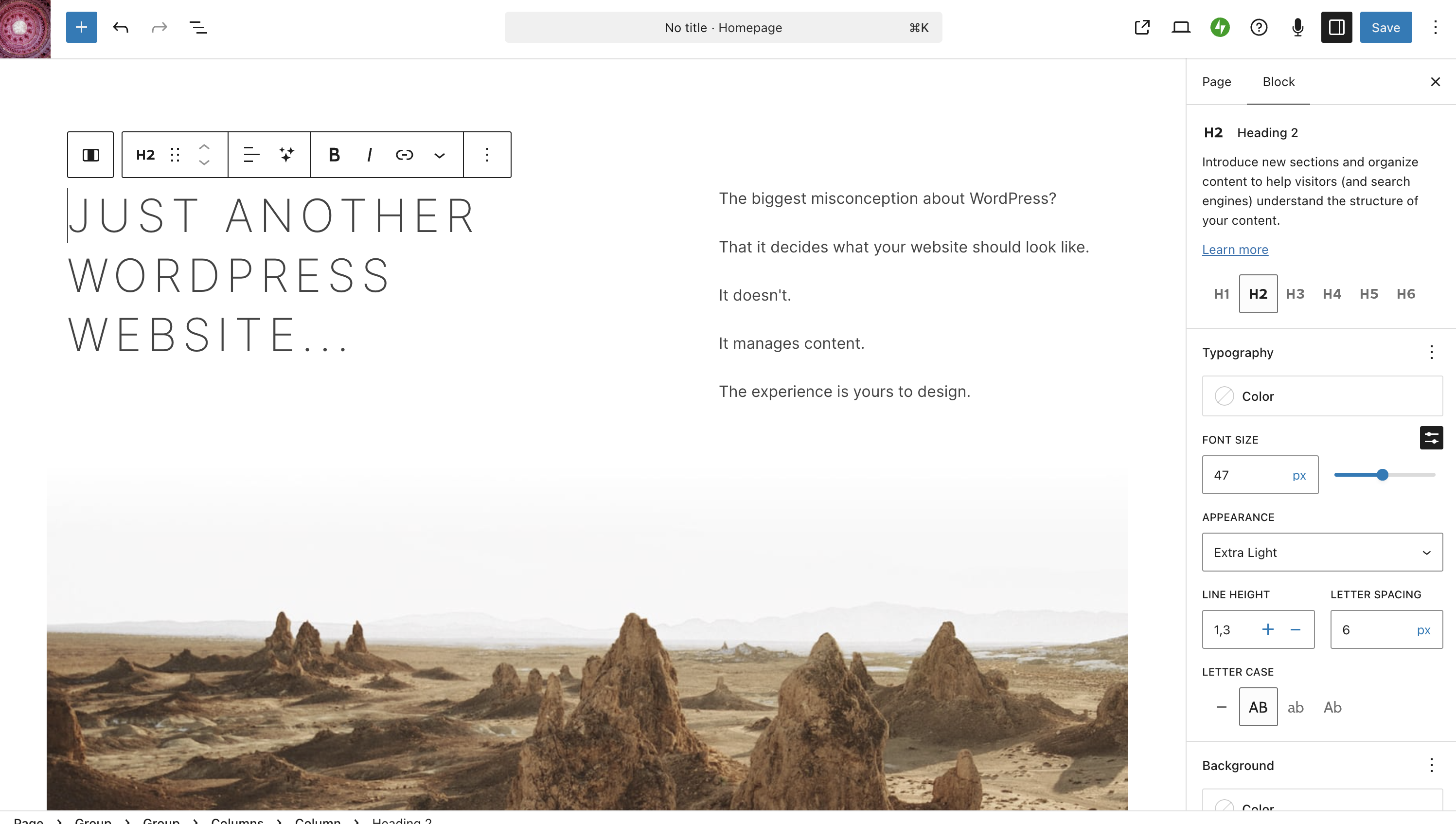
The screenshot above is a joke.
Well... mostly.
No, I'm not claiming every WordPress website looks like this. In fact, there are many excellent designers building beautiful websites with WordPress every day. This article isn't about criticising WordPress. It's about explaining a misconception that many businesses have when they invest in a new website.
Many clients never actually know what's inside the website they've paid for.
In a typical agency workflow, WordPress is installed first. A premium theme or page builder is added, a handful of plugins are installed, and then the design starts taking shape. This approach is fast, familiar and perfectly suitable for thousands of projects. If your goal is a company website, a restaurant page or a small service site, it's often the right solution.
The challenge begins when the design becomes more ambitious.
Modern page builders have become incredibly capable, but they still work inside predefined systems. Every layout, animation and interaction has to fit within the capabilities of the builder or rely on additional plugins. As projects become more complex, websites often become heavier, harder to maintain and more difficult to evolve.
This isn't only about design.
It's also about performance, SEO, maintainability and flexibility.
A typical heavily customised WordPress website can end up loading large amounts of CSS and JavaScript that aren't actually needed. Plugin dependencies grow over time. Updates become more delicate. Integrating custom functionality sometimes means adding yet another plugin to solve a problem that wasn't there in the first place.
None of this means WordPress is bad.
It simply means WordPress is being asked to do two very different jobs at the same time.
That's why I often separate those responsibilities.
I let WordPress do what it does exceptionally well:
- content management
- blog articles
- media library
- SEO
- editors
- user management
Everything that clients need to update themselves.
Then I build the public website separately using modern frontend technologies.
The visitor experiences a completely custom interface, while the client still logs into the familiar WordPress dashboard.
That's what I call a hybrid website.
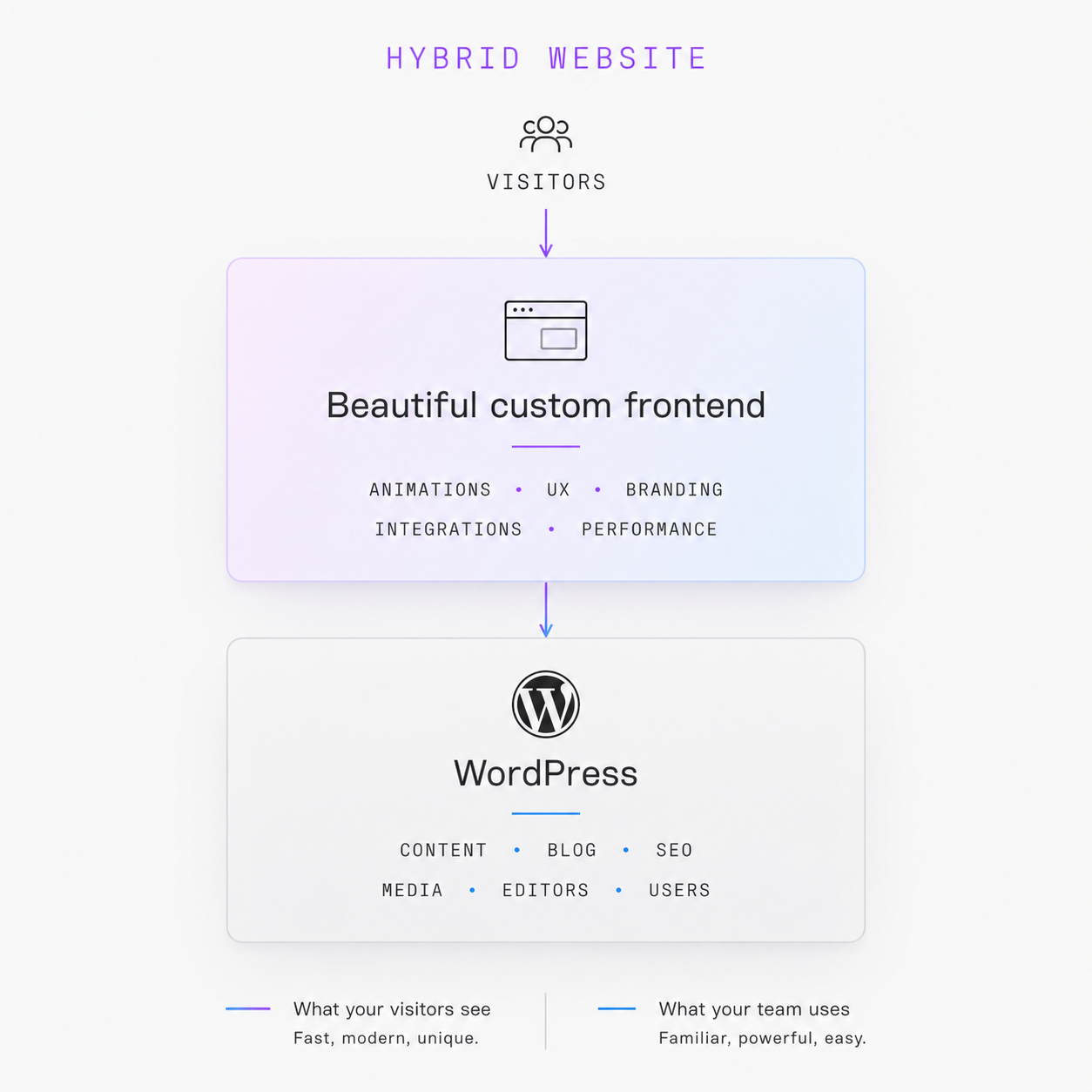
The biggest advantage isn't that it looks cooler.
It's that every part of the project is doing the job it was designed to do.
WordPress manages content.
The frontend delivers the experience.
That separation gives far more freedom for branding, interactions, animations, performance optimisation and future integrations with APIs, AI services, booking systems, CRMs or custom business tools.
It also keeps the editing experience simple for the client.
Is this approach right for everyone?
Not at all.
If you need a straightforward company website, a restaurant page, a local business site or a simple portfolio, a traditional WordPress website is often the smartest investment.
A hybrid website starts making sense when your website becomes part of your business rather than simply describing it.
For example:
- creative agencies
- architecture studios
- premium hospitality
- SaaS products
- startups
- technology companies
- personal brands
- businesses with complex integrations
- companies where the website is expected to sell, educate or provide an experience
These businesses usually benefit from a website that isn't constrained by a template while still enjoying the convenience of WordPress behind the scenes.
In the end, I don't really build WordPress websites.
I build modern websites that happen to use WordPress where WordPress is at its best.
The experience belongs to your brand.
WordPress simply helps manage it.